
Candidate for Historiographer and Executive Director for Research and Scholarship, The Reverend Sharon Grant is proud to announce the completion of the requirements for the Ph.D. in Church History from Southern Methodist University, (SMU) in Dallas, Texas. Dr. Grant's research project was centered on the history of African Methodism on the island of Jamaica, her father’s birthplace. In addition to the completion of the Ph.D. Dr. Grant accomplished the task with Honors on the dissertation and Honors on the oral defense on December 12, 2011. She is the first African-American woman to matriculate and complete the Ph.D. program from the Graduate Program of Religious Studies (GPRS) at SMU. For this and other mercies, Dr. Grant says, “To God Be the Glory, Great things He Has Done!” She remains on a quest to serve the connectional AME church as the next Historiographer and Executive Director of Research and Scholarship. History is not just her academic discipline, it is her ministry, and she is “Today’s Historian for Tomorrow’s Church.”
Wednesday, March 7, 2012

Monday, October 31, 2011
Methodism and the Annual Conference
The end of October typically marks the conclusion of the set of Annual Conferences that convene in the Fall. The episcopal districts throughout the connectional African Methodist Episcopal Church divide the annual conferences along a schedule whereby half of the thedistricts hold their annual conferences in the Spring, and the second half convenes in the Fall. For those of us who have been born and raised in the AME church – the Annual Conference is an event like none other! We ‘plan our work and work our plan’ all year long, just to be able to stand on the floor and present a ‘good report’ before our brothers, sisters, colleagues and episcopal leadership who are all laboring with us in the ministry to expand the kingdom of God on this side of heaven!
I thought it might be helpful to share some history of the Annual Conference as a reminder of its significance to AME’s and all Methodists who share a doctrinal heritage with John Wesley, the founder of Methodism. The first Methodist Conference was convened by John Wesley in 1744 in London, England, when 6 clergy and 4 lay preachers met to answer 3 questions about the future of Methodism:
1. What should we teach?
2. How should we teach?
3. What should we do?
1. What should we teach?
2. How should we teach?
3. What should we do?
In 1744 the first Methodists in England began sorting out their future, with the careful guidance of John Wesley. The first conference was the vehicle they used to clarify their theology and map out an effective strategy of disciple making. From that day forward some sort of annual conference has continued across Methodism.
The first Methodist preachers arrived in North America in the 1760’s, however the first Methodist conference in North America did not convene until 1773. The first conference that inaugurated Methodism in North America was held in St. George’s Church, Philadelphia, Pennsylvania ( YES, the same St. George’s that was the launch pad for African Methodism!) July 14-16, 1773. Methodists in America followed the British precedent set by Wesley and held annual conferences every year after 1773 –even when the Revolutionary War strained communication and personnel.
1784 is an important year for American Methodism in general, and for African Methodists in the AME Church. It was the year that Richard Allen received his license to preach from St. George’s Methodist Church in Philadelphia, and it was the year that an independent Methodist Church was organized after the former North American colonies won their independence from England. John Wesley’s decision to sanction the inauguration of a new church in America was not without controversy, but the end result is that he sent a personal letter, ordained clergy, and a book to be used during worship called, The Sunday Service of the Methodists in North America to assist with the building up of the new church. The letter from Wesley was read – and the men and the book were introduced during the famous Christmas Conference, which began on Friday, December 24, 1784 in the Lovely Lane Methodist Chapel, Baltimore, Maryland. As a newly licensed preacher, Richard Allen was present at this organizing conference, although he would find it necessary to leave and found a separate denomination where persons of African descent would be able to worship freely without the hindrance of racial insult.
Allen loved the conference system of Methodism and as soon as the AME church became legally incorporated in 1816, a conference was called. Allen writes, “Many of the coloured people, in other places, were in a situation nearly like those of Philadelphia and Baltimore, which introduced us, last April, to call a general meeting, by way of conference.”[1] The first Annual conference of the AME Church was held in Philadelphia in April 1816. Delegates from Baltimore, Maryland, Philadelphia, Pennsylvania Wilmington, Delaware, Attleborough, Pennsylvania and Salem, New Jersey were present. Daniel Coker served as Chairman, and Richard Allen, Jr., a young man of fourteen, who was elected Secretary by virtue of his literacy and ability to write. Although this first AME Church conference elected Daniel Coker as the first bishop of the church, after more conciliar deliberation Coker withdrew, and Richard Allen was eventually elected and consecrated by the imposition of the hands of five ordained Elders, among which was Absalom Jones, the first African American ordained priest in the Episcopal Church of North America.
AME’s understand that the Annual Conference can be demanding, stressful events that may conclude with disappointment. However, there is one moment in which all persons, clergy, laity, members and visitors unite in gratitude and praise. That is the moment during the Opening Worship Service when the hymn “ AND ARE WE YET ALIVE” is sung. "“ AND ARE WE YET ALIVE " first appeared in the Wesleys' 1749 hymnal, Hymns And Sacred Poems. In 1780 John included it in his A Collection of Hymns for the Use of the People Called Methodist as the first hymn in the section titled "For the Society . . . at meeting." John Wesley himself, began the custom of opening the annual meeting of Methodists by singing this hymn. The practice was picked up by Methodists around the world, and it largely continues today.
REFERENCES
Allen, Richard. The First Edition of the Discipline of African Methodist Episcopal Church. With historical preface by C.M. Tanner, D.D. Third printing ( Nashville, AMEC Sunday School Union, 1985).
Bucke, Emory S. ed. The History of American Methodism, Vol. I ( Nashville: Abingdon Press, 1964).
Meeks, Douglas The Future of Methodist Theological Traditions (Nashville: Abingdon Press, 1985).
Singleton, George A. The Romance of African Methodism: A Study of the African Methodist Episcopal Church (Nashville; AME Press, 1985).
United Methodist Church General Board of Discipleship website. http://www.gbod.org/site/apps/nlnet/concipketent3.aspx?=nhLRJ2PMKsG&b=5594997&ct=7591979
Accessed October 31, 2011.
Sunday, September 11, 2011
The 32nd Lay Biennial Session blesses Paul Quinn College!
Hello Wonderful People of God!

I pray that you are enjoying the transition into school and a new season. In Texas, we are rejoicing over the respite from the blistering dog days of summer. Just wanted to post some pictures from the Lay Biennial from last month and share a little with you. The 32nd Biennial Session of the Connectional Lay Organization was a wonderful event! It was my first time attending the Lay Biennial and I thoroughly enjoyed myself. My father, The Rev. Hector Grant, Sr. was able to travel with me and assist me in the campaign booth, and I had a blast watching him make new friends and reconnect with friends he hadn’t seen in nearly fifty years!
 |
| Bishop Ingram and Dr. Jessica |
One of the highlights of the Biennial was the Black Tie Affair, a fundraising activity that identified Paul Quinn College (PQC), the AME college in the 10th District as the designated recipient. Approximately $45,000 was raised to assist the school in meeting its urgent financial obligations. On a personal note, my grandmother and father attended PQC and at some point, both of my parents actually taught there. I was peacock proud to be able to attend an elegant, well executed affair and celebrate its recent accomplishments.

Please remember that my vision of service includes developing a website for the connectional church that will feature digitally archived material of AME history that is currently inaccessible. I’m Today’s Historian for Tomorrow’s Church and I remain on a quest to put our past in your hands! Please enjoy some additional images of the CLO 32nd Biennial Session.
 |
| Master and Mistress of Black Tie Affair Bro. Earl (my Co-Chair) and Sis. TaShun Bowden-Lewis, Judicial Council Candidate |
 |
| 10th District VP, Bro. Hollie presents Lady Phyllis,The Connectional Lay Person of the Year! |
 |
| Sis Vicki Houston and I |
 |
| Episcopal Candidate Presiding Elder Anne Henning Byfield and Dad |
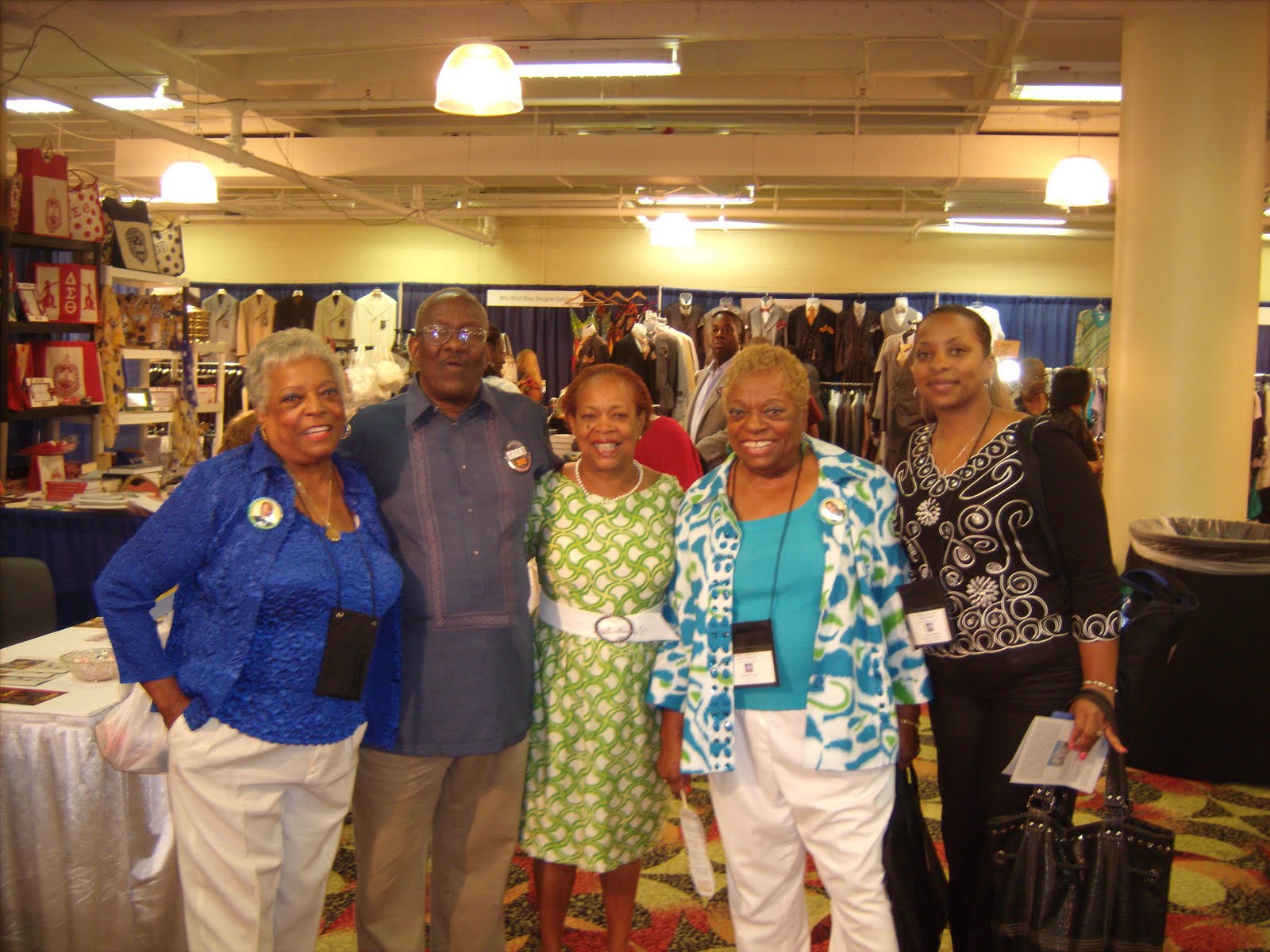 |
| Dad's outnumbered by the ladies! |
 Dad and Dr. Daryl Ingram, Executive Director of Christian Education   | ||
|

 |
| Bishop Sarah Davis and Dad |
 |
| Sis. McMillan and Dad going down memory lane |
Wednesday, August 10, 2011
The Historian as Detective

Hello Wonderful People of God!
I want to share a document with you that I discovered while conducting research in Jamaica last year. Many of you know that my father is Jamaican and I consider the lovely Caribbean island to be my second home. I have spent countless weeks, days and hours analyzing various documents housed in the archives at the Institute of Jamaica and the University of West Indies, in Kingston, as well as the nation’s archival center in Spanish Town.
One historical find that peaked my interest was a newspaper article dated, February 14, 1935 in the Jamaica Gleaner, the country’s oldest continuously published newspaper.[1] The article covered an event where the Right Excellent Marcus Mosiah Garvey, Jr. presented a lecture on the Right Reverend Richard Allen during a Founders Day Observance at the former mother church of African Methodism in Jamaica, Allen Temple A.M.E. Church.[2]
[1] Jamaica Gleaner, 14, February 1935, p. 11. Copyright 2004 Heritage Microfilm, Inc. and Newspaperarchive.com
Mr. Garvey’s Address
The treat of the evening came at [ … illegible] an address by Mr. Garvey. [ … illegible] With his characteristic eloquence and philosophic treatment of the subject, the speaker held the audience enthralled for over 30 minutes while he discoursed on the merits of Richard Allen. He began by saying it was a pleasure to come to them at the invitation of their pastor and to speak on Richard Allen – a character of history and the founder of a great church. The African Methodist Episcopal Church was one well known in America, launched at a time when the negro was being buffeted about [ … illegible] Richard Allen had something original for the Negro in Religion and he founded the A.M.E. Church. Since that time it had been established in every State of the Union and today was spread to Africa, South and Central America and the West Indies .
___________________
After I found the article I became determined to find out if the church was still standing where the 1935 Founders Day lecture occurred. No one I asked who presently attended AME Churches in Jamaica had any memory of the old Allen Temple. Based on the address, it would be in an extremely blighted area of West Kingston - called a garrison that was controlled by gangs and often prone to violence. Nevertheless, after months of investigative research, many days taking the bus or walking on foot, one day I found the building that once represented the Mother Church of African Methodism in Jamaica – the former Allen Temple !!! A.M.E. Church
Below is a picture I took of the church when I was there last year. In this sanctuary, Marcus Garvey paid tribute to our own Bishop Richard Allen.

Well, now we’re off to Detroit , Michigan
Rev. Sharon
Rev. Sharon
Monday, August 1, 2011
2011 WMS Quadrennial in Orlando Florida
"WMS" may as well stand for "With My Sisters!" What a wonderful fellowship I had with the WMS Quadrennial attendees in Orlando this last week!
WMS Quadrennial is the second largest legislative gathering in the AME Church. The estimated 8,000 people in attendance included 2,000 delegates from around the world. I shook hands and shared my aspiration with representatives from Districts 1 - 20. God is good! A new connectional WMS President was elected -congratulations are due to Mrs. Shirley Cason-Reed from the 2nd District! May God bless her and the newly elected slate of connectional WMS officers - among which is new Connectional 1st Vice President, Deborah Taylor King - who hails from the 10th District. Great things come out of Texas!


WMS Quadrennial is the second largest legislative gathering in the AME Church. The estimated 8,000 people in attendance included 2,000 delegates from around the world. I shook hands and shared my aspiration with representatives from Districts 1 - 20. God is good! A new connectional WMS President was elected -congratulations are due to Mrs. Shirley Cason-Reed from the 2nd District! May God bless her and the newly elected slate of connectional WMS officers - among which is new Connectional 1st Vice President, Deborah Taylor King - who hails from the 10th District. Great things come out of Texas!

QUEST 2012 Manpower! Bros.William Earl and Hiram Harrison.

Visiting with Mrs. Melanie Thibodeaux from Shreveport, LA. Had to call and tell my father that I reconnected with his mentor from his years at Campbell College in Jackson, Mississippi!

Embracing a dear friend, Sis. Goodness Thwala, from Swaziland.
Sunday, July 24, 2011
Heading to Quadrennial
 Documents that tell our Story |
As I write, the connectionalYoung People’s Department (YPD) is gathering in Orlando, Florida for their Quadrennial, and the Women’s Missionary Society is preparing for their gathering in just a few days. I look forward to visiting with many of you there! Before I depart for Orlando, I’d like to share a bit more about my vision for the office of Historiographer and Executive Director of Research and Scholarship. Definitively, the term historiography literally means, ‘the history of historical writing’. Another way to look at it is that in general - a historiographer analyzes the way other historians have written history about certain subjects.
For example, many of you are old enough to remember when the history of the United States was written and taught in schools from the narrow perspective of contributions of powerful white males. Well, historiographers study the ideas, events, and personalities that accompanied, or in many cases demanded a change in the way U.S. History is written and taught such that the contributions of women, the poor, African-Americans, Hispanic Americans, Native-Americans and other excluded persons are given proper recognition to the formation of the United States.
The most important tool that historians use to research the past is called the primary source. Most primary sources are documents that were created by witnesses or first recorders of historical events during (or very near) the time they occurred. They include, but are not limited to: journals, speeches, interviews, conference minutes, letters, reports, photographs, financial records, memos, and newspaper articles. I have provided an image of The 1817 Doctrine and Discipline of the AME Church, first published by Richard Allen in 1817 - a very important primary source document for our Zion.
For our current use, The 2008 Doctrine and Discipline of the AME Church lays out the requirements for the connectional office of Historiographer on pages 158, 159. Per the discipline, the historiographer’s first three essential duties are:
(1) Write an updated history of the African Methodist Episcopal Church.
(2) Represent the AME Church by participating in several historical societies.(3) Act as the archivist of the church – finding historical records of our church and placing them in safe and accessible locations. After AME historical records have been securely housed, copies of these documents must remain in the custody of the AME Church.

In reference to the first task of the connectional historiographer, my research on the AME Church in Jamaica contributes significantly to an updated history of the AME Church. As it relates to the second task, I have had the privilege of attending several important gatherings of the mentioned societies as a Methodist Church historian who is ordained in the AME Church. (See photo of the Summer Wesley Seminar at Duke University in 2008. ) The third task, is of profound interest to me, as I am convinced that this is the area with the most potential to expand the AME Church’s capacity to perform historical research within the 21st century and beyond. This directly relates to my vision of placing the primary sources of our AME Church at your fingertips!
If I am elected Historiographer and Executive Director of Research and Scholarship, my first order of business will be to create a digital archival center, where members, scholars and interested persons can locate and use primary source documents of the AME Church in a digital format. In other words, documents that reveal the history of our church - missionary correspondence, various conference minutes, miscellaneous letters, organizational records and more will become electronically accessible.
I invite you to take a look at two websites that provide access to many AME historical documents in digital format. The first is provided by the University of North Carolina: http://docsouth.unc.edu/. The second is provided by the Ohio Historical Society: http://dbs.ohiohistory.org/africanam/serial/aa_se01.cfm. Using this format, I pledge my full-time commitment to place the AME REVIEW online and provide research tools that provide access to documents that tell our stories - stories of the history of the connectional AME Church from District 1 through District 20.
I pray that you are able to ‘feel’ my passion for this work, and my enthusiasm in this quest to serve you. History is not just my academic discipline, but my ministry, as I am “Today’s Historian for Tomorrow’s Church!”
Be Blessed!
Rev. Sharon
Quest 2012 Candidate
Historiographer/Executive Director of Research and Scholarship
Monday, June 27, 2011
Hello, South Carolina!
Greetings from the 10th!
I have returned from the 2011 General Board and Council of Bishops and what a refreshing experience it was! I had the precious opportunity to meet and greet so many wonderful people from around the connection and I am ever so grateful.
It was a particular pleasure to share my vision for the office of Historiographer. May I remind you of my commitment to:
- Organize and Digitize as many AME historical documents as possible, with your help
- Make these documents and every resource that comes out of the office user-friendly and understandable for every AME member, from YPDers to those in the Academy.
- Move to Nashville, TN and pursue this work full-time.
Your words of encouragement and support were received in the warm spirit in which they were shared and will carry me on to the finish line. I thank you for the time and attention you shared with me and hope that you are convinced that I am indeed "Today's Historian for Tomorrow's Church!"
Yours,
Rev. Sharon J. Grant
Candidate- 2012
Historiographer/ Executive Director of Research & Scholarship
Candidate- 2012
Historiographer/ Executive Director of Research & Scholarship


Thursday, June 2, 2011
What is the task of the Historian?
Hello all!
I pray that you are experiencing a wonderfully blessed Easter season as we move rapidly toward Pentecost Sunday! As I thought about what might be a useful topic to blog about I realized that no matter what side of the globe you are on, the month of May was eventful. To start off:
- President Obama announced the execution of Osama Bin Laden.
- As soon as the news cycle started to slow, the Mississippi River began to swell and portions of the country faced unprecedented danger from the impending flood waters.
- Oprah retired after twenty-five years and we watched her commemorate her legacy as the Queen of Daytime Television.
- Last week, we watched in horror as a once in a lifetime F -5 tornado ripped through the town of Joplin, Missouri, killing at least 139 people and causing unspeakable amounts of damage.
- Last, but not least, the country waited and watched with half-expectant, half-amused attention for the end of the world to occur on May 21, 2011.
Some of these events will have lasting historical impact on our world, our country, our communities and our lives. Historians sort out the lasting impact of an event by analyzing it and then making an interpretation of its meaning by looking at the 'world' around the event.
What does that mean for members of the AME Church?
Well, for example, when I attended the Lay Biennial Executive Board Meeting in Detroit, Michigan in April - Bishop John Bryant made a statement that seemed to indicate that much of our church history is preserved from the perspective of clergy, i.e. Bishops and Pastors. That simply means that persons who are documenting and analyzing the events that take place in our churches, presiding elder districts, annual conferences, and General conferences are often interpreted from a clergy person's perspective. The hard work of laity is often overlooked. Therefore, the work of the conscientious historian, or historiographer, is to make every attempt to observe a church event from several points of view - clergy and laity before attempting to interpret its significance.
I look forward to seeing many of you as we travel to the General Board, the Quadrennial and the Lay Biennial! I remain on a quest to put our history in your hands!
In Christ's grace,
Rev. Sharon
Friday, April 15, 2011
Moving and Sharing- Reflections During Lent
Hello All!
My prayer is that all of you experience the fullness of God’s presence during this most holy season of Lent. I wanted to take a moment to share what has been happening with me of late on this awesome journey!
This is my first semester as an Adjunct Professor at The University of the Incarnate Word in San Antonio , Texas
There are two opportunities for those of you who desire to view recent releases of my work:
 The first is the release of a three-part DVD series,The Wesleyan Studies Project, produced by Wesley Theological Seminary in

 The second is the recent release of the Apr-June AME REVIEW. This journal features articles, sermons and scholarly publication by and about the historical legacy of women in the

I would like to make mention of two other items of interest inside this edition of AME REVIEW that place ordained women of Texas Waco , Texas AME Church Church of Allen
Rev. Sharon
Thursday, February 17, 2011
Richard Allen and the Importance of Historical Literacy

Hello Wonderful People of God,
February 14 commemorates the birthday of Bishop Richard Allen, the founder of the African Methodist Episcopal Church. All Episcopal Districts within the AME Connectional Church set aside time for special reflection upon Allen's importance to the church. However, this year many AME's and interested persons with Internet access around the globe, had a unique opportunity to view a minidocumentary, Bishop Richard Allen, Apostle of Freedom. This first rate film illustrates the life of Richard Allen and reflects the effective collaboration between Dr. Mark Tyler, Sr. Pastor of Mother Bethel AME Church in Philadelphia, PA, and Sam Katz's History Making Productions.
Philly.com -a digital news journal of the Informer newspaper, published a wonderful article by Howard Shapiro on the "watch party" and Founders Day Worship Service at Mother Bethel last Sunday. When I read the article I was struck by the last sentence of the article, which was a quote by DeBrickashaw Ferguson, NFL player and financial supporter of the film. Mr. Ferguson offered this commentary: "It's easy to see why people are blessed in this church,...because they come from a great history, and a great founder."
This statement succinctly sums up my theme for this post - HISTORICAL LITERACY. This phrase uses History as an analogy to a hot topic in the country right now - health literacy. Literacy simply means the ability to read and write. However, health literacy is defined as the capacity to obtain, process and understand basic health information and services needed to adopt healthy behaviors and make appropriate health decisions. Advocates for health literacy know that persons who cannot read, write, or comprehend the information are likely to have higher health care costs and poorer health outcomes, therefore they create opportunities for health care professionals to learn how to communicate effectively with people. Disparaging health statistics reveal the impact of poor health literacy on people living in poverty, which adversely affects people of color and the elderly.
Well, what about HISTORICAL LITERACY and the importance of historical knowledge to a person's wellbeing? As a historian, I define HISTORICAL LITERACY as the capacity to obtain, process and understand basic historic information. HISTORICAL LITERACY provides access to information and tools to interpret that information - so that individuals and communities can adopt healthy cultural attributes which contribute to life-afffirming choices based on: a sense of communal awareness; positive self identity; and divine purpose.
HISTORICAL LITERACY is not just for the development of the intellect, it is necessary for the health of one's soul. When you look at communities who succeed at a higher rate than others, they are communities who make significant investment in the preservation of their history. The African Methodist Episcopal (AME) Church is one such community of faith -with a high success rate of achievement and contribution in all sectors of these United States, and across the globe. I am convinced that it is due to Bishop Richard Allen's grasp of the importance of HISTORICAL LITERACY - as revealed in the "Historical Statement" of the The Book of Discipline of the African Methodist Episcopal Church. I believe Bishop Allen understood that an enslaved people would never become fully liberated in body and soul unless they had access to information which illustrated their struggles and triumphs in times past. The "Historical Statement" has been revised, but never excluded - it can be found in every published AMEC Book of Discipline, and is a constant reminder that history matters.
This is why I often state that "History is not just my discipline, it is my ministry". One cannot engage in the cure and care of souls without utilizing history in some form. The historical principle is biblical and spiritual. Throughout the Old Testament and the New Testament, persons are reminded to serve the GOD of Abraham, Isaac and Jacob. They are taught that YHWH is the One True God whom the ancestors worshipped and who constantly acts in history to liberate oppressed people. The Christ event is a historical event - the Transcendent God became Incarnate at a specific time and in a specific place in history to redeem sinful people. History Matters. The Free African Society was organized in 1787, by people of African descent who lived in Philadelphia, Pennsylvania with a goal to mitigate and eventually obliterate the factors which kept Africans in bondage physically, psychologically, socially and spiritually. History Matters.
The Richard Allen documentary released globally this week is a significant achievement in the effort to increase HISTORICAL LITERACY among all persons interested in the history of our founder and his contribution to the United States of America. Happy Founders Day week to African Methodists everywhere! Bishop Allen's legacy through the AME Church continues to make an impact across the world.
Rev. Sharon
"Today's Historian for Tomorrow's Church"
Thursday, February 10, 2011
Looking Back to Look Forward
Happy Black History Month from the Quest 2012 Campaign!!
Check out the images below. You may click anywhere on the image to enlarge it!


Check out the images below. You may click anywhere on the image to enlarge it!


Thursday, January 27, 2011
A Weekend with Bishop Sarah- San Antonio
Last weekend was filled with two wonderful events for Quest 2012. Bishop Sarah F. Davis and Supervisor Claytie Davis were present to support my aspiration for Historiographer/Executive Director of Research & Scholarship. The theme for the weekend was “Moving Forward in a Season of Change”. The first evening was an intimate fellowship dinner held at the Fort Sam Houston Golf Clubhouse on Friday, January 21, 2011. It was a full house and all enjoyed listening to Bishop Sarah and Supervisor Claytie share their experiences of conducting ministry in the 16th Episcopal District, and especially the ongoing critical situation in Haiti Southwest Texas region.


Saturday morning was another elegant affair. The Brunch featuring Bishop Sarah was simply amazing! Persons travelled from Austin , Corpus Christi , and Dallas Texas


The connectionalAME Church continues to surprise me as I discover how relationships are cultivated and sustained within our transnational Zion County Commissioner

 Bishop Sarah preached a powerful sermon from the text Isaiah 42. She reminded us all to stay keenly aware of the place from which we receive our instruction and to hold firmly to the decision to listen only to the voice of God.


The connectional


Dr. Raye Adkins and a special Planning Committee from the Southwest Texas Conference worked tirelessly to make sure that these events were thoughtfully planned and smoothly executed. I am so grateful to have such dynamic supporters in my corner! Special thanks to them and everyone who attended, supported financially, lifted us in prayer and otherwise showed support for my effort.
I’ve posted some miscellaneous photographs that do simply do not justice the wonderful time that was had with family, loved ones and supporters near and far!
Thank you,
Rev, Sharon
Thank you,
Rev, Sharon


"Moving Forward in a Season of Change"
Holiday Inn- San Antonio International Airport
Saturday, January 22, 2011
Subscribe to:
Posts (Atom)